Archive Press Releases

A bacterial toolkit for colonizing plants<br /> 
Using a novel experimental approach, Max Planck researchers have discovered a core set of genes required by commensal bacteria to colonize their plant hosts. The findings may have broad relevance for understanding how bacteria establish successful host–commensal relationships.
  [more]
Unravelling the basis of the dual role of TFL1 in reproductive development
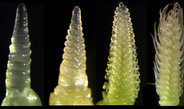
Reproductive development in plants involves a transition from the vegetative phase during which leaves are continuously produced at the shoot apex, to the reproductive phase marked by the production of inflorescence branches and flowers. Scientists at the Max-Planck Institute for Plant Breeding Research in Cologne have used morphological characterization coupled with protein expression patterns and gene expression profiling to investigate how a regulatory protein called TERMINAL FLOWER 1 carries out two distinct functions at the shoot apex during flowering in the model species Arabidopsis thaliana.
  [more]
Immune defense as key for plants conquering land<br /> 
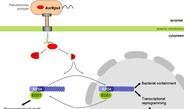
A new study, led by Hirofumi Nakagami at the Max Planck Institute for Plant Breeding Research in Cologne, Germany, demonstrates that one of the two branches of plant immunity was likely to have evolved early during the establishment of plants on dry land. This insight into prehistoric plant immunity may have implications for breeding more resistant plant species.
  [more]
Structural insights illuminate the arms race between crop plants and fungal pathogens<br /> 
Scientists from the Max Planck Institute for Plant Breeding Research shed light on how harmful fungi evade recognition by their plant hosts and aid infection.
  [more]
A guide through the genome
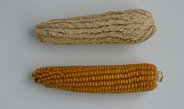
Plants show enormous variety in traits relevant to breeding, such as plant height, yield and resistance to pests. One of the greatest challenges in modern plant research is to identify the differences in genetic information that are responsible for this variation. A research team led by the "Crop Yield" working group at the Institute for Molecular Physiology at Heinrich Heine University Düsseldorf (HHU) and at Max Planck Institute for Plant Breeding Research in Cologne (MPIPZ), together with the Carnegie Institution of Science at Stanford, has now developed a method to identify precisely these special differences in genetic information. Using the example of maize, they demonstrate the great potential of their method in the journal Genome Biology and present regions in the maize genome that may help to increase yields and resistance to pests during breeding. [more]
Keeping competitors away drives colonization success in the plant microbiota
Scientists from the Max Planck Institute for Plant Breeding Research, in Cologne, in collaboration with an international team of researchers, have identified natural chemical strategies that bacteria use to keep competitors at bay and successfully proliferate on plants. The study is now published in the journal PNAS.
  [more]
Scientists provide evidence for new theory of genetic recombination<br /> 
New findings from researchers at the Max Planck Institute for Plant Breeding Research in Cologne, Germany, suggest an explanation for the century-old mystery of how chromosome recombination is regulated during sexual reproduction. Their findings are published in the journal Nature Communications.
  [more]
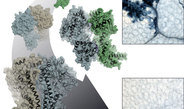
Structure of wheat immune protein resolved – important tool in the battle for food security
Scientists from the Max Planck Institute for Plant Breeding Research and the University of Cologne in Germany together with colleagues from China have unravelled how wheat protects itself from a deadly pathogen. Their findings, published in the journal Nature, could be harnessed to make important crop species more resistant to disease. [more]
Resolving target-gene specificity via protein–protein interactions<br /> 
A fundamental topic in plant development is how proteins function together in regulatory networks to coregulate the activity of specific target genes. A collaboration between researchers in the groups of George Coupland and Jijie Chai from the Max-Planck Institute for Plant Breeding Research and the University of Cologne has elucidated an elegant mechanism for how a particular protein–protein interaction cooperatively targets genes in Arabidopsis by affecting DNA conformation. The findings, published in Nature Plants, has wider implications for how transcription factors can achieve regulatory specificity in other developmental contexts.
  [more]
Speeding up evolution at genome-level by alternative chromosome configuration<br /> 
A research team led by André Marques at the Max Planck Institute for Plant Breeding Research in Cologne, Germany, has uncovered the profound effects of an atypical mode of chromosome arrangement on genome organization and evolution. Their findings are published in the journal Cell. [more]
Molecules boosting plant immunity identified<br /> 
Two studies published in the journal Science by researchers at the Max Planck Institute for Plant Breeding Research in Cologne, Germany in collaboration with colleagues in China have discovered natural cellular molecules that drive critical plant immune responses. These compounds have all the hallmarks of being small messengers tailored by plants to turn on key defense-control hubs. Harnessing these insights may allow scientists and plant breeders to design molecules that make plants, including many important crop species, more resistant to disease. [more]
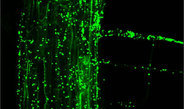
A stiff polymer called lignin (stained red) is deposited in a precise pattern in the cell walls of exploding seed pods. Researchers identified three laccase enzymes required to form this lignin. No lignin forms in the cell wall when all three genes are knocked out by CRISPR/Cas9 gene editing
Researchers identify the genes controlling the mechanical structure of exploding seed pods [more]
A two-step adaptive walk in the wild<br /> 
New research in plants that colonized the base of an active stratovolcano reveals that two simple molecular steps rewired nutrient transport, enabling adaptation.
  [more]
Roots stiffen up to stop growth
The plant hormone cytokinin inhibits root cell growth [more]
barley floret
The study, published in Current Biology, shows a direct link of auxin to pollen fertility. [more]
An island model - uncovering adaption
Wild populations of the model plant Arabidopsis thaliana from the Cape Verde Islands reveal the mechanisms of adaptation after abrupt environmental change.
  [more]
Potato genome decoded

Potato genome decoded

March 03, 2022
The complete sequencing of the genetic material facilitates the breeding of new varieties [more]
Differentiating friends from foes in the fungal root microbiome
A collaborative project between researchers has shed light on the fungal genetic determinants that explain why some fungi from the root microbiome can colonize roots and cause disease more efficiently than others.
  [more]
Host and resident bacteria join forces to control fungi in plant roots<br /> 
Researchers from the Max Planck Institute for Plant Breeding Research (MPIPZ) have discovered that diverse root-colonizing fungi can benefit plants, but only when they are kept in check by the host innate immune system and the bacteria residing in roots. [more]
Flowering of annual and perennial plants is delayed by changes in the position and number of <em>MADS</em>-box genes<br /> 
New study highlights the value of using genetic crosses and genomic comparisons between closely-related plant species. [more]
Accurate method for determining active genes<br /> 
The total DNA of an organism is significantly more extensive than the actual genome used. A consortium of German and U.S. researchers involving the Max Planck Institute for Plant Breeding Research in Cologne (MPIPZ) and the Heinrich Heine University Düsseldorf (HHU) developed a method in order to determine all regions of the active genome in a single analysis. They present their results using the crop plant maize in the current issue of the journal PLoS Genetics.
  [more]
Of oil, wine and friends, the oldest is the best: root-associated bacteria preferentially colonize their native host-plant roots
An international team of researchers from the Max Planck Institute for Plant Breeding Research and the University of Åarhus in Denmark have discovered that bacteria from the plant microbiota are adapted to their host species. In a newly published study, they show how root-associated bacteria have a competitive advantage when colonizing their native host, which allows them to invade an already established microbiota. [more]
Belowground microbial solutions to aboveground plant problems
Researchers from the Max Planck Institute for Plant Breeding Research (MPIPZ) have discovered that signalling occurring from the response of plant leaves to light, and plant roots to microbes, is integrated along a microbiota-root-shoot axis to boost plant growth when light conditions are suboptimal. [more]
Identity of an induced protein complex linking pathogen-activated immune receptors to rapid mobilization of immunity
Scientists from MPIPZ in collaboration with the Sainsbury Laboratory (UK) find a long sought after complex between two conserved plant-specific protein families that connect pathogen-activated immune complexes to defence outputs. [more]
Plant-microbe homeostasis: a delicate balancing act
Scientists from the Max Planck Institute for Plant Breeding Research in Cologne, and the University of North Carolina at Chapel Hill, have shown that the presence of both immune-suppressive and non-suppressive bacteria in the plant root microbiota is crucial to strike a balance between plant growth and plant defence, and maintain plant-microbe homeostasis. [more]
<p>The synaptonemal complex limits meiotic crossover and  imposes crossover interference</p>
A team in the department of Chromosome Biology at MPIPZ in collaboration with INRAE of Versailles France, explored the function of the synaptonemal complex. [more]
<em>MICRORNA</em> genes that promote flowering of Arabidopsis
Scientists at the Max Planck Institute for Plant Breeding Research in Cologne have shown how individual members of the MIR172 gene family promote flowering.

[more]
Plant homeodomain proteins promote synthesis of the hormone auxin to help leaves grow wide
Recent findings presented by Dr. Zhongjuan Zhang, Dr. Miltos Tsiantis and their colleagues offer important advances in our understanding of morphological diversity using plant leaves as an example [more]
A plant immune receptor: it takes four to tango
A collaborative study on a plant intracellular immune receptor from researchers at the Max Planck Institute for Plant Breeding Research (MPIPZ) also reveals some common operational principles with immunity proteins from humans. [more]
<p>For plant and animal immune systems the similarities go beyond sensing</p>
Max Planck Institute for Plant Breeding Research (MPIPZ) and University of Cologne researcher Takaki Maekawa and colleagues have discovered that plants have independently evolved a family of immune proteins that are strikingly similar to animals. [more]
<p>Hungry plants rely on their associated bacteria to mobilise unavailable iron</p>
Researchers from the Max Planck Institute for Plant Breeding Research have found that, faced with limiting iron, plants direct their microbiota to mobilise this essential nutrient for optimal growth. [more]
Unpacking the two layers of bacterial gene regulation during plant infection
By analysing the different layers of bacterial gene expression during pathogen infection of a plant host, Kenichi Tsuda and colleagues from the Max Planck Institute for Plant Breeding Research in Cologne, Germany and Huazhong Agricultural University in Wuhan, China have revealed new insights into bacterial gene regulation as well as the strategies employed by plants to target key bacterial processes. [more]
<p>Plants from diverse European habitats associate with the same small group of highly abundant microorganisms</p>
A continental-scale census and analysis of root-inhabiting microorganisms reveals that plants across Europe consistently harbour a small group of unexpectedly abundant ‘core’ microorganisms, irrespective of soil conditions and climate. [more]
Self-restrained genes enable evolutionary novelty
Evolution can promote novelty by keeping gene expression in check [more]
New leaf shapes for thale cress
Max Planck researchers equip the plant with pinnate leaves [more]
Ready, Steady, Go

Ready, Steady, Go

April 05, 2019
Cryo-electron microscopy reveals the molecular steps in plant immune receptor activation [more]
New paper on the phylogeny of the Brassicaceae
A recent study from the Max Planck Institute for Plant Breeding Research in Cologne, published in the New Phytologist, helps resolve these issues by reporting new insights into the relationships among Brassicaceae species. [more]
Arabidopsis thaliana
In many plant species, flowering is controlled by day length through the transcriptional regulation of a key gene called FLOWERING LOCUS T (FT) in the model plant Thale cress (Arabidopsis thaliana). The Turck group at the Max Planck Institute for Plant Breeding Research (Cologne, Germany) has used an epigenetic approach to systematically probe regions surrounding the FT locus for a regulatory role in FT expression. As they now report in Nature Plants (doi 10.1038/s41477-019-0375-2), FT’s response to long days requires the presence of both, a previously characterized distal enhancer located in the promoter and the support of its “shadow” enhancer located downstream of the gene. [more]
Plants can skip the middlemen to directly recognize disease-causing fungi
Scientists at the Max Planck Institute for Plant Breeding Research in Cologne have revealed that direct physical associations between plant immune proteins and fungal molecules are widespread during attempted infection. [more]
Linking sensing to signaling during plant immunity
A new study by researchers at the Max Planck Institute for Plant Breeding Research (MPIPZ) in Cologne has revealed that a previously unappreciated structural feature underlies the ability of the plant immune molecule EDS1 to provide a timely defense boost against pathogens. [more]
Old plants flower in winter cold
Researchers reveal how the age of a plant determines its sensitivity to winter cold [more]
Leaf age determines the division of labor in plant stress responses
A new study from researchers at the Max Planck Institute for Plant Breeding Research published in the journal PNAS shows that the crosstalk between plant responses to physical and biological stresses varies between young and old leaves to enable optimal plant performance when the two kinds of stress are encountered simultaneously. [more]
Genome-wide association with structural variants
Genome-wide association is a powerful tool to identify the molecular causes of trait diversity within species. In most association studies, genotyping single nucleotide polymorphism (SNPs) is regarded as sufficient. [more]
With a little help from their friends: plants rely on their resident bacteria to protect them from harmful microbes
Conclusions of a study published in the journal CELL that was led by Stephane Hacquard and Paul Schulze-Lefert at the Max Planck Institute for Plant Breeding Research in Cologne, Germany. [more]

Large cells for tiny leaves

October 26, 2018
Scientists identify mechanism that controls leaf growth and shape [more]
Nitrogen-fixing bacteria and their plant hosts: old friends that go way back
The relationship between so-called rhizobia, nitrogen-fixing bacteria that are mostly from the order Rhizobiales, and leguminous plants is one of the best-characterized beneficial plant-microbe interactions in all of nature. [more]
A genetic barcode for the epigenetic repression of the floral program
Plant cells silence their flowering genes with the help of a small DNA-binding protein family which also stabilizes telomeres and promotes the expression of photosynthetic genes. A genetic barcodes shows this family what has to be done. These proteins are thus important mediators of epigenetic imprinting and determine cell fate in plants (Nature Genetics, doi: 10.1038/s41588-018-0109-9). [more]
<p>Revealing the intricacy of plant-bacteria interactions</p>
A team of researchers from Germany and the US led by Kenichi Tsuda at the Max Planck Institute for Plant Breeding Research (MPIPZ) in Cologne have now developed a method that can be used to probe the complexity of plant-bacteria interactions. [more]

A jigsaw puzzle of plant cells

February 28, 2018
The epidermal cells of many plant organs resemble the pieces of a jigsaw puzzle helping them withstand the high pressure in their interior [more]
Soil resident microbes are resilient to long-term fertilizer application
New work from a team of scientists headed by Paul Schulze-Lefert at the Max Planck Institute for Plant Breeding Research in Cologne [more]
Enhancing leaf shape diversity

Enhancing leaf shape diversity

November 16, 2016
A small piece of DNA with a large effect on leaf shape [more]
Not without my microbiome

Not without my microbiome

November 14, 2016
Legume-rhizobia symbiosis influences bacterial community in plant roots [more]
Bittercress genome

Bittercress genome

October 31, 2016
A high-quality genome sequence helps pinpoint the genetic basis for trait diversity.  [more]
Exploding myths about seed dispersal
Scientists discover how a common garden weed expels its seeds at record speeds. [more]
Flowering at the right time
The success of plant and animal species depends on producing as many offspring as possible. [more]

When foes become friends
A few modifications in the genome turn a fungal plant pathogen into a potentially beneficial organism [more]
The Art of Being Connected in the Microbial World
Similar to the skin of humans millions of microbes are living on the surface of a leaf influencing the health and fitness of the plant. [more]
Make Peace not War

Make Peace not War

December 18, 2015
“The best way to destroy an enemy is to make him a friend”. Abraham Lincoln’s political wisdom can also be transferred to evolution as illustrated by many examples of mutually beneficial interactions or even symbioses between species that started out as deadly adversaries. [more]
Toolkit for microbiota research
Researchers cultivate the majority of bacteria in the laboratory that colonize Arabidopsis plants in nature [more]

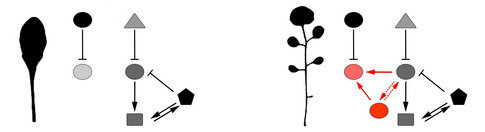
Pleiotropy influences the genes shaping leaf diversity [more]
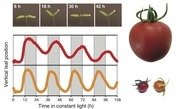
Wild and domesticated varieties of tomato have a different circadian rhythm [more]
Variation in leaf shapes within a plant species is caused by differences in how fast plants develop [more]
Direct capture of a potent bacterial virulence activity by a plant immune receptor pair
In this article published in Cell, Le Roux et al. (2015), describe an exquisite recognition mechanism in the model plant species Arabidopsis. [more]
Exploring the maintenance and diversity of plant immunity genes in nature
A study published by Alcazar et al in PLoS Genetics provides some important leads to the evolution of the immune system in European populations of Arabidopsis thaliana and mechanisms underlying the maintenance of particular immunity-related genes or allelic forms in nature. [more]
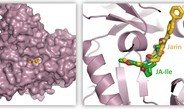
A small molecule inhibits jasmonic acid and helps to explain its effects [more]

Gene for dissected leaves

February 14, 2014
Arabidopsis thaliana lost the RCO gene over the course of evolution and thus forms simple leaves [more]
Census in the plant root

Census in the plant root

January 21, 2014
Bacterial communities that colonise plant roots reflect the plant’s species affiliation and location preferences [more]

Immune system's errand boy

December 16, 2013
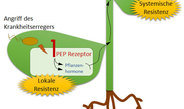
Signalling pathway links local and systemic plant immunity [more]
The molecular architecture of three key proteins and their complexes reveals how plants fine-tune their immune response to pathogens [more]
The secret of short stems

The secret of short stems

November 12, 2013
Arabidopsis plants that only reach half their normal height have a mutation in the biosynthesis of the plant growth factor gibberellin [more]
The parasitic plant fungi primarily turn to sexual reproduction when host plants improve their defense mechanisms [more]
Alpine rock cress uses a ribonucleic acid to measure its age and tell when it’s the right time to flower [more]
A simple means of finding mutations
An algorithm that compares genomes to find serious mutations [more]
Even in closely-related species, life-style moulds the genetic make-up of pathogens and how their genes are used [more]
Plants choose the soil bacteria that they allow into their roots [more]
An international consortium sequences the tomato genome
Scientists of the University of Bonn are involved in the international project [more]
A change in its internal clock helps barley adjust to cultivation in northern environments with short summers [more]
A leaf gene active in the maize cob causes leaves to grow in the male and female inflorescences [more]
Immune response depends on the distribution of plant and bacterial proteins [more]
When seeds from the thale cress Arabidopsis thaliana mature, their cell nuclei reduce in size and the chromatin condenses [more]
So-called "coil-coil domain" drives cells to programmed cell death [more]
When it comes to pollen formation, seed plants go for overproduction [more]
The fungal pathogen has only those genes left that are necessary for its parasitical existence [more]

Mildew-resistant and infertile

November 24, 2010
Two proteins involved in powdery mildew infection in plants also play an important role in fertilisation [more]
Crossbreeding can result in incompatible gene combinations [more]
Barley genes against drought

Barley genes against drought

November 08, 2010
With many regions of the world becoming more arid as a result of the climate change, the crop yield also decreases. New types of crops should therefore be more resistant to aridity. [more]
New insights into the function of microRNAs in plants: abolishing a microRNA converts petals to stamens [more]
Max Planck researchers develop another tool for making the interactions between proteins visible [more]

The Secret Love Life of Plants

December 08, 2005
Researchers in Cologne discover signals between plant embryos and their endosperm [more]
Max Planck researchers in Cologne, Germany demonstrate that a multi-step defence system underlies the durable resistance of plants to fungal parasites [more]

Take Two!

October 20, 2005
Max Planck researchers in Cologne have discovered how protein kinases in plants regulate adaptation to changing light conditions [more]

Imported Fitness

August 19, 2004
Max Planck Researcher in Cologne, Germany, unravel mechanism of resistance to fungal infection in Barley [more]
Max Planck scientists have discovered how plants initiate the formation of flowers depending on the length of day and time of year [more]
Go to Editor View